

You Got So Good at Editing Yourself That You Forgot the Original Draft
Most self-abandonment doesn’t happen all at once. It happens one reasonable edit at a time.

You got so good at editing yourself. You don’t realize you’re doing it until years have passed.
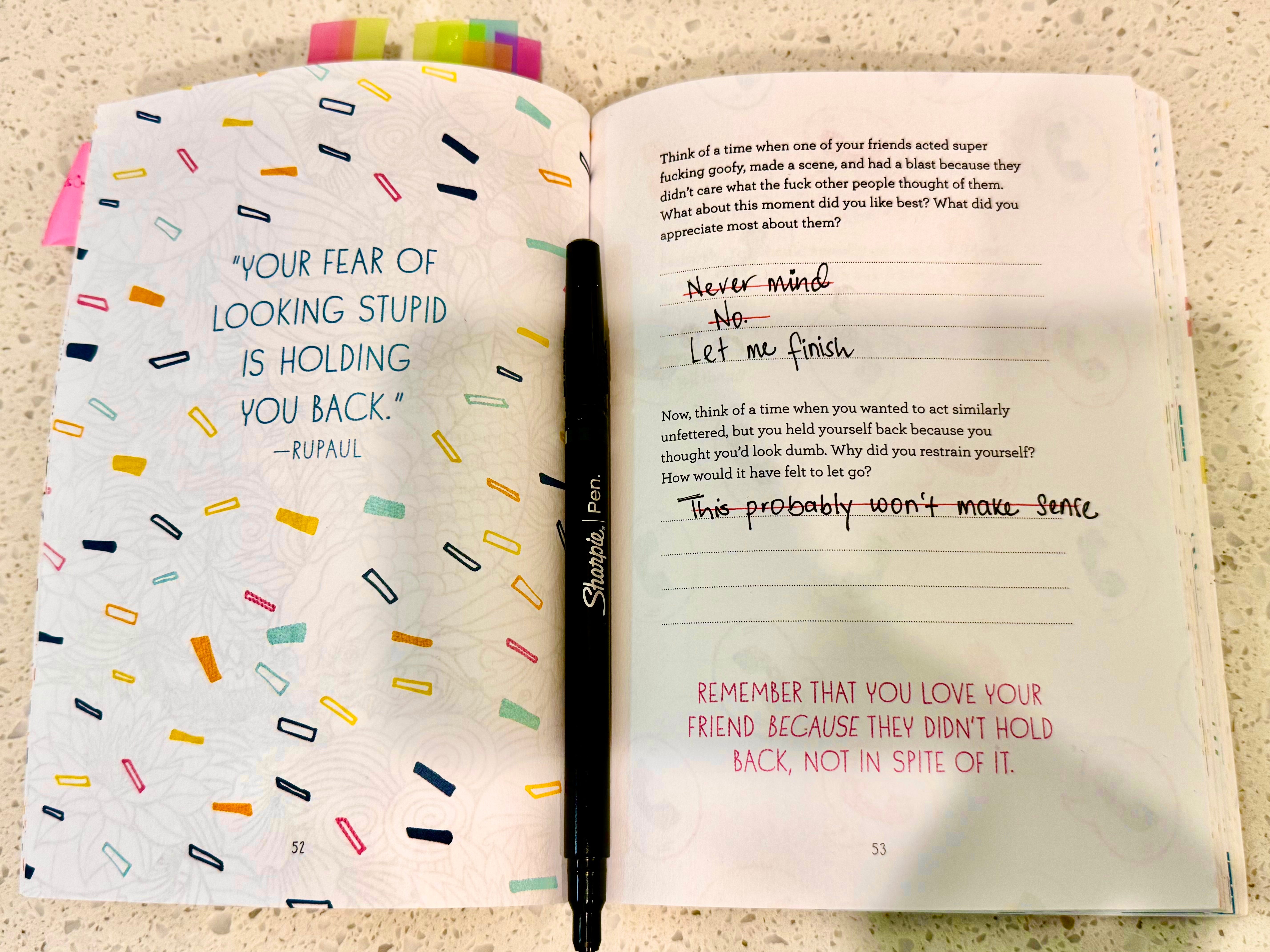
Halfway through a sentence, I changed my mind. Not because I no longer believed what I was about to say. It was because I saw the look on their face. You probably know the one. The tiny pause. The slight confusion. The moment someone stops following where you’re going. Before they even said a word, I started rewriting myself in real time.
I shortened the story. Removed the side road. Skipped the connection I was about to make. I started translating, simplifying and then apologizing. By the time I finished speaking, what came out wasn’t exactly what I meant. It was the edited version.
Have you ever noticed yourself doing that?
You’re not lying and you’re not pretending either. You’re just quietly trimming pieces off yourself before they reach the air. Making yourself a little easier to understand, tolerate and a little easier to love.
When did you first learn that being understood required editing yourself first?
See, most people think this is maturity. I did too for a very long time. Many of us were rewarded for it. Be agreeable, flexible and you learned to read the room while keeping the peace. Make it easy for people to love you but nobody hands you a manual.
You just learn which parts of you get smiles and which parts get silence. Then you adjust. A little here. A little there. Until one day something strange happens.
You get so good at editing yourself that you forget what the original draft sounded like.
Not because you wanted to disappear, because disappearing happened in such small pieces. One reasonable edit at a time and the strange thing is that you never called this editing. You called it being thoughtful. Being mature,self-aware and very easy to get along with.
Only later did I start noticing how often I was adjusting myself before anyone had actually asked me to. Softening the observation, shortening the story, dropping the connection while leaving pieces out. Not so that people could know me better. It was so that the conversation could move more smoothly. The edited version of you can look a lot like maturity from the outside but from the inside, it often feels like disappearing in ways nobody else notices.
How many parts of you have people praised without knowing they were looking at your protection?
Editing your emotions looked like holding back tears after someone called you too sensitive. While editing your needs sounded like, “I’m fine,” before anyone had the chance to be disappointed. Ideas got smaller after someone called the connection random. Ambition learned to whisper because wanting too much felt dangerous.
Joy got quiet too and so did your dancing, your singing excitement and your enthusiasm. Not because it was wrong, because somebody laughed at you. Even your intelligence learned to shrink. This was followed by less explaining and Less sharing of what you knew. Fewer observations that made other people uncomfortable. You learned to edit your loneliness. You became so good at taking care of yourself that nobody realized how badly you wanted someone to take care of you too.
I spent years believing there was something wrong with the way my mind worked. What I noticed as the observant one, people would tell me what I said was random. What they didn’t understand was that I was already standing at the last dot while everyone else was still looking at the first one. My brain wasn’t moving in a straight line. It was moving in patterns.
Connections would arrive all at once. I’ll give you an example. A conversation about friendship could suddenly pull in something I learned in therapy. Then something my dog Misty did that morning, a reader comment and then a memory from childhood.
Before I knew it, I could see the whole picture. But from the outside? It looked messy. So I started editing.I would stop myself before sharing the connection. I would start by saying: “Sorry, this is random.” Or: “This probably won’t make sense.” Or my personal favorite: “Never mind.” The thing I said when I had already decided my explanation would require too much work.
Some parts of you only come out where they feel safe. Around the friend who lets you ramble until the point finds itself. Beside the person who doesn’t make you explain the bridge between one thought and the next. In rooms where you don’t have to perform calm just to be understood.
I wonder which version of you feels most alive? Also which version of you gets the most approval?
Full transparency, I have found that those are not always the same person.
This is the grief nobody talks about. Not losing yourself all at once. Realizing how many tiny negotiations it took to become easy. The sentence you swallowed. The question you softened. The idea you made smaller. The apology you offered before anyone asked for one. Then the harder part for you is that unfortunately people liked you that way. They praised the edited version and they called it maturity, dependability, peace and strength.
Being easy to love was making you harder to find.
For a long time, I thought growth meant becoming someone better. Now I think growth is remembering who was there before the editing started. I thought I needed to learn how to think differently. What I actually needed was room to think the way I already did. No wonder meeting yourself again can feel so emotional.
You are not becoming someone new. You are recognizing someone familiar. A voice you haven’t heard clearly in years. The part of you that spoke before checking the room. Made connections without apologizing for them. Trusted what she noticed. Sometimes the tears arrive because a hidden part of you realizes she doesn’t have to stay hidden anymore.
Six weeks ago, I would have read an essay like this more than once. I needed proof that there wasn’t something wrong with me. Language for the exhaustion. A reason being myself seemed to require so much work. I couldn’t find it. So I wrote it. Not because I have it all figured out, because I needed it too.
The edited version of you was not maturity. It was survival.
The original version of you, the one who noticed early, connected quickly, felt deeply, wanted honestly and saw what others could not see yet. She never disappeared. She has been waiting. Patiently. For you to stop apologizing for her.
Here is something small for you to try this week. When you catch yourself saying.
“Sorry, this is random.”
“This probably doesn’t make sense.”
“Never mind.”
Pause. No forcing. No performing bravery.
Just ask yourself this. Was that protection? Or was that editing?
Then pay attention to where your nervous system reaches for the red pen. A sentence swallowed or a story abandoned. Some part of you crossed out before it ever reached the room. Something interesting thing happened.
I started noticing that the safer I felt, the more honest I became.
Not louder, just more honest. Maybe that is what this asks of us. Not to become someone else, but to stop hiding the person who was there all along.
Before you go.
I’ll be in the comments holding space. Not to fix you. Not to rush you. Not to make you explain every version of yourself you had to edit. Just to witness what starts opening. Please take what helps from this and leave what doesn’t. This is my offering to anyone who learned to become easier before they learned they were already enough.
If this gave you language you did not have before, let that be the beginning. If it made you think of someone who has spent years apologizing for how they think, feel, speak, or move through the world, send it to them today. Sometimes one shared sentence is enough to help someone feel less alone.
If this conversation feels familiar, it may be because editing yourself often starts long before adulthood. I wrote about one version of that in my essay on parentification. You Weren’t the Easy Child. You Were On Duty. Many readers found themselves there first and you might too.
If you need a face and voice with the words, or if you prefer listening, I talk through some of these themes in the video version of The HSP Sanctuary on Youtube.
Same truth and tenderness. Plus, it’s another place to come hang out with me.
So, I’d love to know: What part of yourself became easier to love after you edited it? Also, what do you miss about the version that came before?
xo,
Sly. 💛
Free gives you the language. Paid gives you the practice.
I’ll share first: The part that became easier was my needs because I learned not to have them. The part I miss is the version of me that wanted things without apologizing.
What part of yourself became easier to love after you edited it? What do you miss? 🤗💛
I started editing myself at such a young age I didn’t know what the original even was.